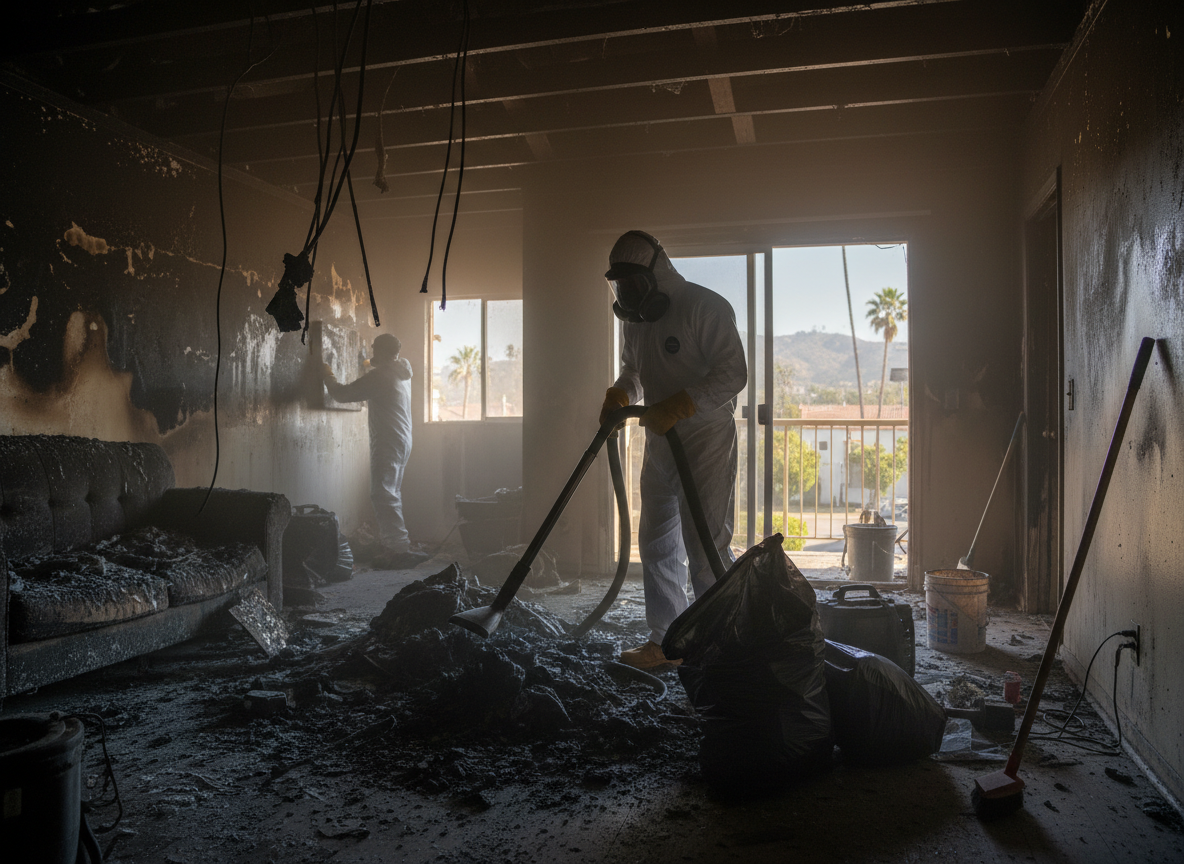
Tenant fire damage cleanup in Sherman Oaks often involves older stucco and wood-frame homes built in the 1950s and 1960s that trap heavy soot in lath-and-plaster walls and under floorboards. Warm dry summers increase the frequency of electrical fires from overloaded window units, while mild winters mean crews work through lingering smoke odors that travel between units in multi-family buildings near Sherman Oaks Circle. Restoration focuses on HEPA vacuuming, soda blasting and odor neutralization rather than full demolition when renters need to return quickly.
Work near Van Nuys Sherman Oaks Park and Los Encinos State Historic Park frequently encounters properties with mature landscaping that carries smoke residue into soil and irrigation lines. Crews must coordinate with property managers to separate tenant belongings from landlord fixtures, documenting every item before disposal. Los Angeles County code requires permits for any structural opening, so teams limit invasive cuts and rely on thermal imaging to locate hidden char in attics common to South Sherman Oaks homes.
Smoke migration through shared HVAC ducts in buildings around the Sherman Oaks Galleria creates cross-contamination between units, demanding negative-air machines and sealing of return vents before cleaning begins. Tenant policies usually cover contents only, so crews photograph and inventory personal items separately from building elements to support separate claims. Dry summer air accelerates corrosion on metal fixtures once soot is present, requiring prompt neutralization to prevent permanent pitting on appliances and hardware.
Technician insight
In Sherman Oaks the thing that catches most people out with tenant fire damage cleanup is how quickly smoke travels through the shared attics and knob-and-tube wiring runs in 1950s homes around South Sherman Oaks; one unit fire can leave residue in three neighboring properties before anyone notices.
Studio City Adjacent Smoke Migration
A kitchen fire in a Sherman Oaks rental spread soot through ceiling joists into the unit above. Inspection showed heavy residue inside the shared HVAC trunk and under original hardwood floors. Crews isolated the systems, cleaned ducts with negative air, and treated all surfaces before returning both units within five days.
How it works
- 1
Initial Assessment and Containment
Technicians arrive within hours, secure the unit, and set up containment barriers to stop soot from spreading to unaffected rooms or neighboring units.
- 2
Contents Inventory and Removal
All tenant belongings are cataloged, photographed, and moved to an off-site facility for cleaning or disposal while structural cleaning proceeds.
- 3
Structural Cleaning and Odor Removal
Soot is removed from walls, ceilings, ducts and cavities using HEPA equipment and approved agents; ozone or hydroxyl machines address embedded smoke odors.
- 4
Final Clearance and Return
Air quality testing confirms safe re-entry; the unit is returned to the tenant with documentation for insurance and property management.
Pricing
Pricing varies by fire size, soot penetration depth and whether contents require off-site cleaning; most tenant jobs are billed through renter insurance or property owner claims.