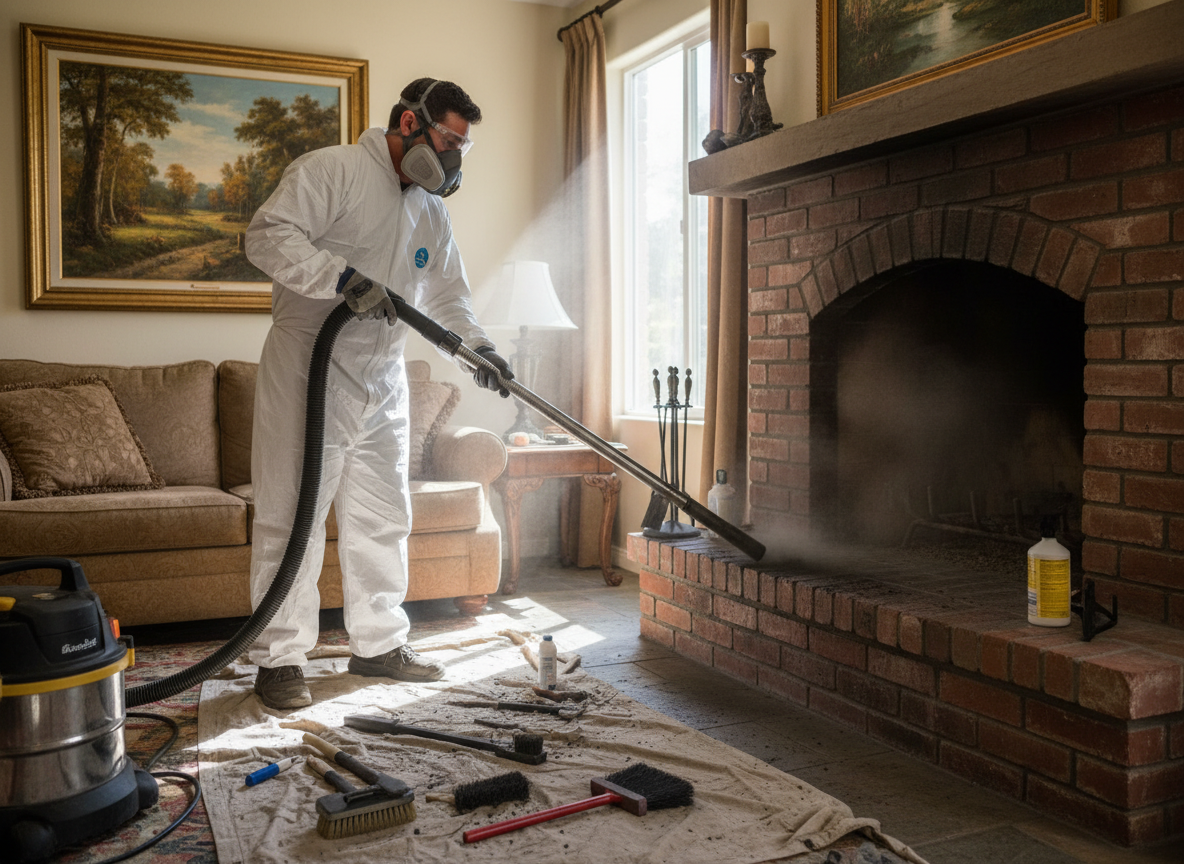
Soot from structure fires in Sherman Oaks carries acidic compounds that etch glass, corrode metal fixtures, and embed in the textured plaster walls common in 1950s and 1960s homes near Sherman Oaks Circle. Dry summer conditions and Santa Ana winds push fine particles deep into ductwork and attic insulation, requiring negative-air machines and HEPA filtration to prevent redistribution into living spaces. Technicians at our 14425 Burbank Blvd location use pH-neutral cleaning agents on hard surfaces and specialized sponges on porous materials to neutralize residue before it causes secondary staining.
In South Sherman Oaks and bordering Encino properties, soot often settles on acoustic ceiling tiles and within the cavities of single-wall construction typical to the area. Mild winters keep windows closed longer, trapping odors that require thermal fogging or ozone treatment after visible cleaning. We test surfaces with litmus strips before and after each pass because alkaline cleaners can react with soot acids and create new discoloration on hardwood floors around Van Nuys Sherman Oaks Park.
Edge cases include soot migration into Los Encinos State Historic Park-adjacent homes where original woodwork cannot tolerate aggressive solvents. We mask and protect these elements, then use dry-ice blasting on masonry fireplaces when water-based methods risk damaging historic finishes. All debris is sealed in lined containers before transport to approved Los Angeles County disposal sites.
Homeowners sometimes attempt DIY vacuuming with household units, which exhausts particles back into the air and forces repeat visits. Our crews document pre-existing conditions with photos and moisture readings so insurance adjusters see exactly what the fire event altered versus normal wear in the region’s older housing stock.
Technician insight
In Sherman Oaks, the thing that catches most people out with soot removal is how the dry summers let fine particles travel through the unsealed attic spaces of 1960s ranch homes near the Galleria and settle inside wall cavities that never get opened during a standard cleaning.
Soot in South Sherman Oaks Attic
A kitchen fire sent soot through the return ducts of a 1958 home in South Sherman Oaks. We found heavy accumulation on insulation batts and inside the HVAC trunk line running to bedrooms. After sealing the system and performing dry removal plus fogging, the homeowners could reopen windows without the smell returning even during warm evenings.
How it works
- 1
Site Assessment
We inspect all affected rooms, test surface pH, and map soot migration paths through HVAC returns and attic spaces.
- 2
Containment Setup
Negative pressure zones and floor-to-ceiling plastic barriers isolate work areas to keep particles from traveling into unaffected Sherman Oaks rooms.
- 3
Dry Removal
HEPA vacuums and dry sponges lift loose soot from walls, ceilings, and contents without smearing acidic residue.
- 4
Deep Cleaning and Odor Neutralization
pH-balanced washes clean hard surfaces followed by thermal fogging or ozone to eliminate embedded odors in fabrics and insulation.
- 5
Final Verification
Clearance testing confirms surfaces are neutral and air quality meets post-fire standards before barriers come down.
Pricing
Cost depends on square footage affected, depth of soot penetration into insulation and ducts, and whether odor treatment is required.