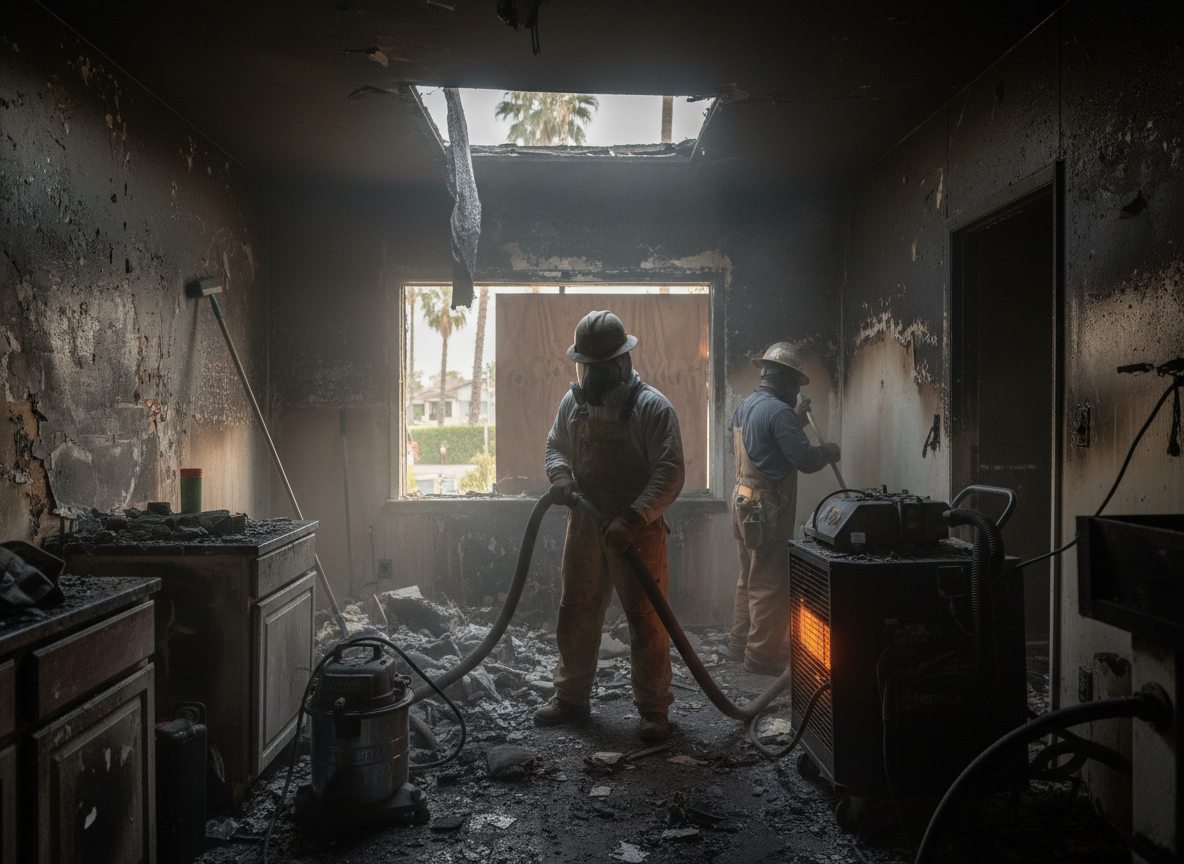
Sherman Oaks housing stock includes many 1950s and 1960s single-story ranch homes with stucco exteriors and wood framing that allow smoke to travel through attics and wall cavities during a fire. Warm dry summers increase soot adhesion on surfaces while mild winters keep vents open longer, letting particulates settle deeper into insulation and HVAC systems than in wetter climates. Los Angeles County building codes require permits for any structural work after fire events, and crews must separate salvageable materials from those needing full removal to avoid mold issues once restoration begins.
Edge cases often appear near Sherman Oaks Galleria and in South Sherman Oaks where multi-unit buildings share walls, allowing smoke migration that single-home jobs do not present. Older plaster and lath construction common around Sherman Oaks Circle demands slower, gentler cleaning methods to prevent further cracking. Crews must also account for the flat terrain and limited drainage that can complicate water use during suppression and later cleanup phases.
Technicians begin by mapping smoke paths from the fire origin through the structure, testing porous materials like carpet padding and drywall for hidden contamination before any cleaning starts. Containment barriers and negative air machines protect unaffected rooms, especially important in the dry air that lets fine particles remain airborne. Final verification includes checking behind cabinets and in crawl spaces typical of local homes before returning the property to the owner.
Technician insight
In Sherman Oaks, the thing that catches most people out with Emergency fire damage restoration is how the dry summers let soot travel through the older single-story ranch homes built in the 1950s around Sherman Oaks Circle, requiring full HVAC cleaning that most overlook.
Attic Fire Smoke Spread in South Sherman Oaks
Smoke from an attic electrical fire traveled through open vents in a South Sherman Oaks home. We found heavy soot inside wall cavities and HVAC ducts due to the mild winters keeping vents active. Containment and targeted cleaning removed the contamination without full demolition, returning the house to safe use.
How it works
- 1
Initial Assessment
Technicians arrive within hours, document damage room by room, and test materials for smoke penetration while noting any Los Angeles County permit needs.
- 2
Containment And Safety
Plastic barriers and air scrubbers isolate the affected zones to stop soot from spreading through the older ventilation systems found in Sherman Oaks homes.
- 3
Soot And Debris Removal
HEPA vacuums and specialized sponges clean surfaces; damaged insulation and drywall are removed where smoke has traveled into wall cavities.
- 4
Odor Neutralization And Restoration
Thermal fogging and ozone treatments address lingering smells, followed by repairs and repainting to match original finishes.
Pricing
Upfront quotes provided after inspection; final cost depends on fire location, extent of smoke travel, and materials affected.