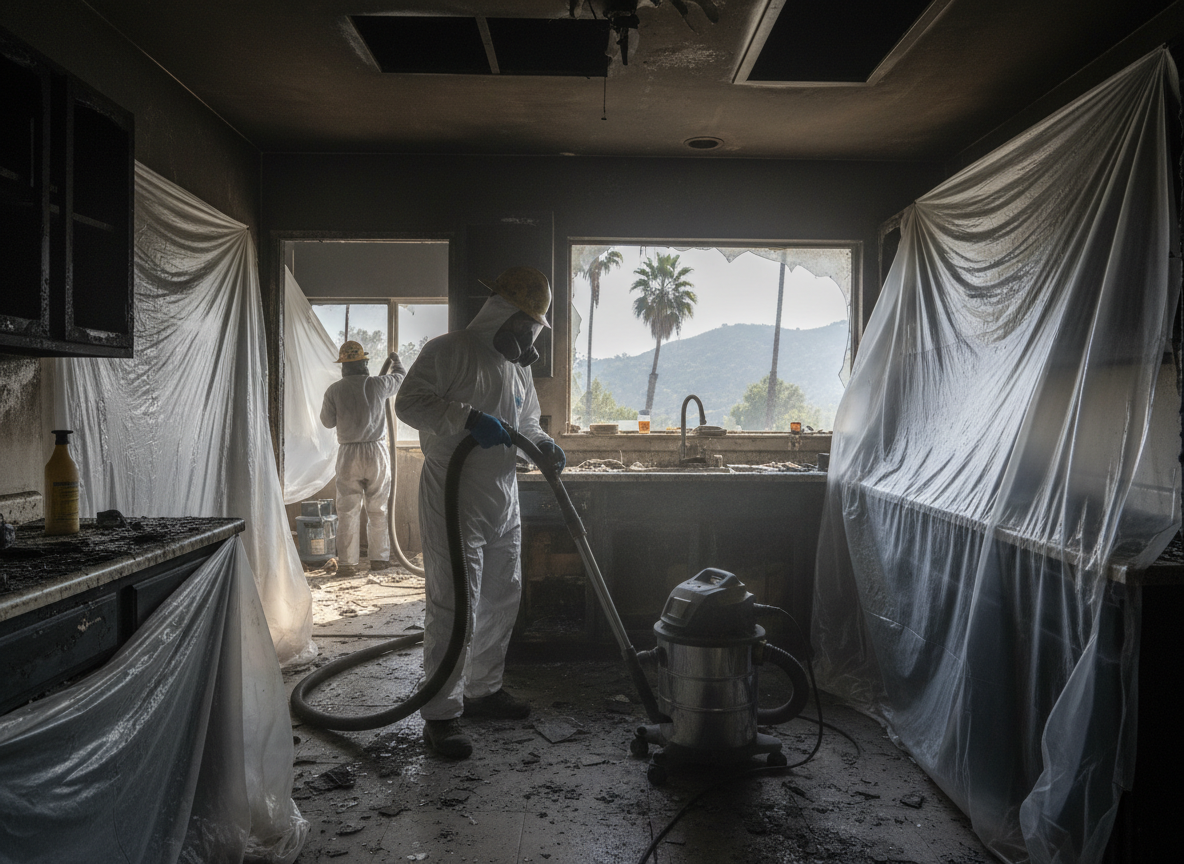
Sherman Oaks homes built before the 1970s often feature lath-and-plaster walls and older HVAC systems that trap smoke particles deep inside cavities. Warm, dry summers increase ember travel from nearby hills into South Sherman Oaks and Sherman Oaks Circle, leaving fine ash on roofs and inside attics that later falls through ceiling vents. Mild winters keep windows closed longer, allowing smoke odors to linger in fabrics and insulation. Proper clean up requires HEPA vacuums, thermal fogging and removal of affected drywall sections rather than surface wiping alone, or odors return within weeks.
Los Angeles building codes require permits when structural materials are disturbed during clean up, especially in multi-story homes near Van Nuys Sherman Oaks Park where hillside drainage can carry residue into soil. Crews must isolate HVAC returns immediately to prevent spreading particles into unaffected rooms. Materials such as popcorn ceilings and acoustic tiles common in 1960s tract homes absorb smoke differently than modern drywall, demanding separate handling and disposal. Skipping these steps leads to failed final inspections and repeated visits.
Nearby Studio City and Encino share similar housing stock, but Sherman Oaks properties sit closer to the 405 freeway corridor where traffic vibration can loosen already compromised ceilings after a fire. Technicians test surfaces with chemical indicators before sealing to confirm all acidic soot is neutralized, preventing corrosion on copper wiring and plumbing. This level of detail separates quick cosmetic jobs from work that passes county reinspection on the first try.
Seasonal Considerations
Dry summer conditions increase the volume of fine ash that settles on exterior stucco, requiring pressure-washing at controlled PSI to avoid driving residue into porous surfaces. Winter jobs shift focus to interior condensation that reactivates smoke odors in closed-up homes.
Technician insight
In Sherman Oaks the thing that catches most people out with fire damage clean up is how smoke travels through the shared attic spaces common in 1950s-60s homes along Burbank Blvd, especially after a dry summer when embers land on shake roofs and smolder undetected for hours.
South Sherman Oaks Smoke Intrusion
A kitchen fire in a 1962 Sherman Oaks home sent smoke through ceiling vents into the attic shared with the neighboring unit. We found heavy soot on insulation and inside ductwork that standard wiping would have missed. Containment, HEPA extraction and targeted fogging cleared the residue and restored air quality without disturbing the original plaster walls.
How it works
- 1
Initial Assessment
Technicians inspect every room, attic and HVAC run to map soot migration and identify hidden damage in older Sherman Oaks construction.
- 2
Containment and Safety Setup
Plastic barriers and negative air machines isolate affected zones to stop cross-contamination into clean areas of the home.
- 3
Soot and Ash Removal
HEPA vacuuming, dry sponging and approved chemical cleaners lift residue from walls, ceilings and contents without spreading particles.
- 4
Odor Neutralization and Final Clearance
Thermal fogging and air scrubbing remove embedded smoke smell, followed by a walkthrough with the homeowner before equipment is removed.
Pricing
Cost depends on square footage affected, depth of smoke penetration into older plaster or insulation, and whether HVAC cleaning is required.