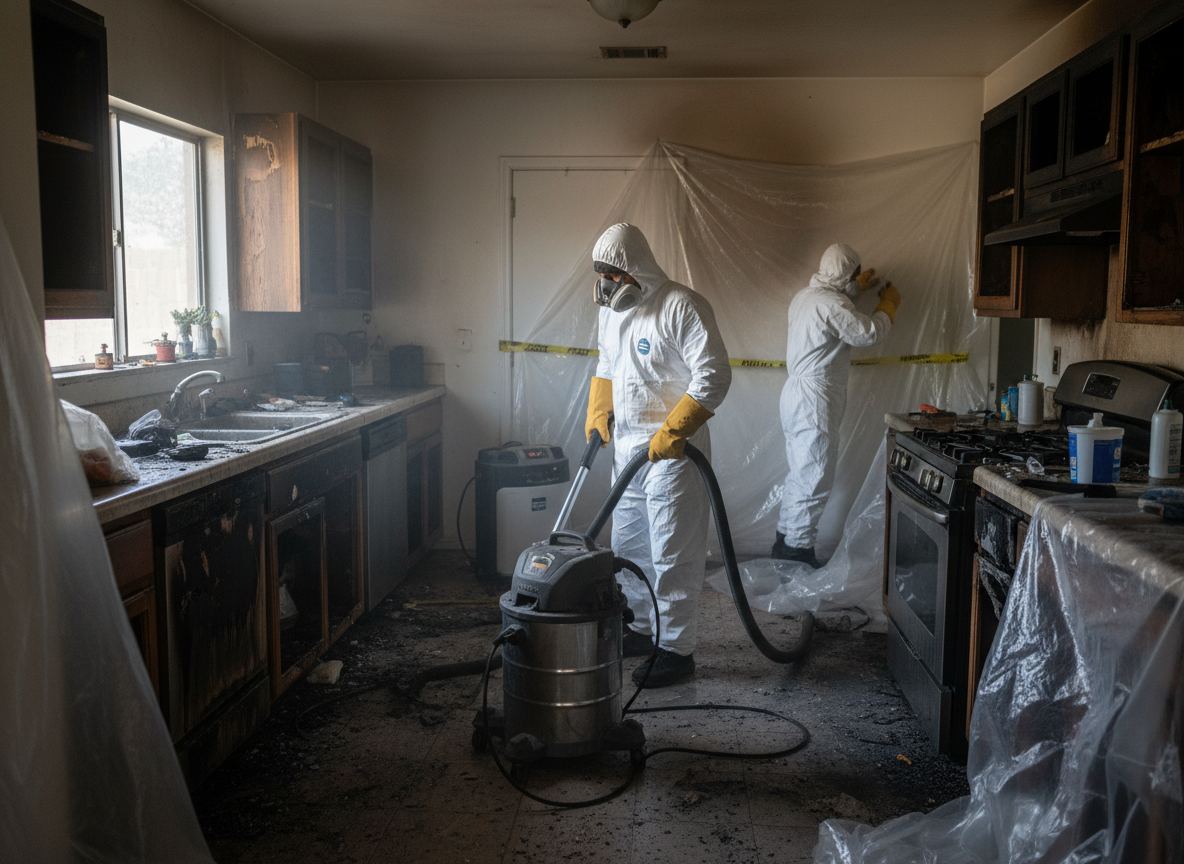
Kitchen fires in Sherman Oaks often start on older gas ranges common in homes built from the 1950s through 1970s near Sherman Oaks Circle and South Sherman Oaks. These fires produce thick grease-laden smoke that travels through HVAC systems and settles on cabinet interiors, drywall and attic insulation. Warm dry summers increase the risk of rapid spread while mild winters mean residents keep windows closed, trapping odors longer. Proper remediation requires removing affected porous materials rather than surface cleaning alone to prevent recurring smells and potential code violations during resale inspections.
Soot from kitchen fires bonds differently to the semi-gloss paints and laminate surfaces typical in Los Angeles tract homes compared with newer builds in Encino or Van Nuys. Technicians must test pH levels on walls and ceilings because alkaline residues from burned plastics and cooking oils can damage finishes if left untreated. Containment barriers and negative air machines are essential when working near Los Encinos State Historic Park to avoid disturbing neighboring properties during dry, windy conditions common in the area.
Edge cases include fires that travel into range hood ducts or behind tile backsplashes, leaving hidden char that later causes structural weakening. In these situations, partial demolition of cabinetry or drywall is required before ozone or thermal fogging can neutralize odors. Homeowners in Sherman Oaks frequently attempt DIY cleaning with household products that set the residue, making professional extraction more difficult and costly later.
Technician insight
In Sherman Oaks the thing that catches most people out with kitchen fire cleanup is how grease smoke travels through the original metal ductwork in 1960s homes near Van Nuys Sherman Oaks Park, leaving residue in the attic that later stains ceilings when temperatures rise during our warm summers.
Hidden Soot in South Sherman Oaks Kitchen
A grease fire on a range spread into the hood and attic space of a 1968 home. Inspection revealed soot throughout the original ductwork and insulation. We contained the kitchen, removed affected materials, cleaned all surfaces and ducts, then treated for odors. The family returned within four days with no remaining smoke smell.
How it works
- 1
Initial Assessment
Technicians arrive 24/7, document the affected kitchen areas, test for hidden smoke in ducts and insulation, and identify materials that must be removed.
- 2
Containment and Safety
Plastic barriers and negative air filtration are set up to isolate the kitchen from living spaces, protecting nearby rooms in Sherman Oaks homes.
- 3
Soot and Residue Removal
Specialized equipment extracts grease and soot from surfaces, HVAC registers and ductwork while HEPA vacuums capture fine particles.
- 4
Odor Neutralization and Restoration
Thermal fogging or ozone treatment eliminates lingering smells, followed by replacement of damaged drywall, cabinetry and insulation as needed.
Pricing
Cost depends on square footage affected, extent of duct contamination and whether structural materials require replacement; we provide upfront written quotes after inspection.