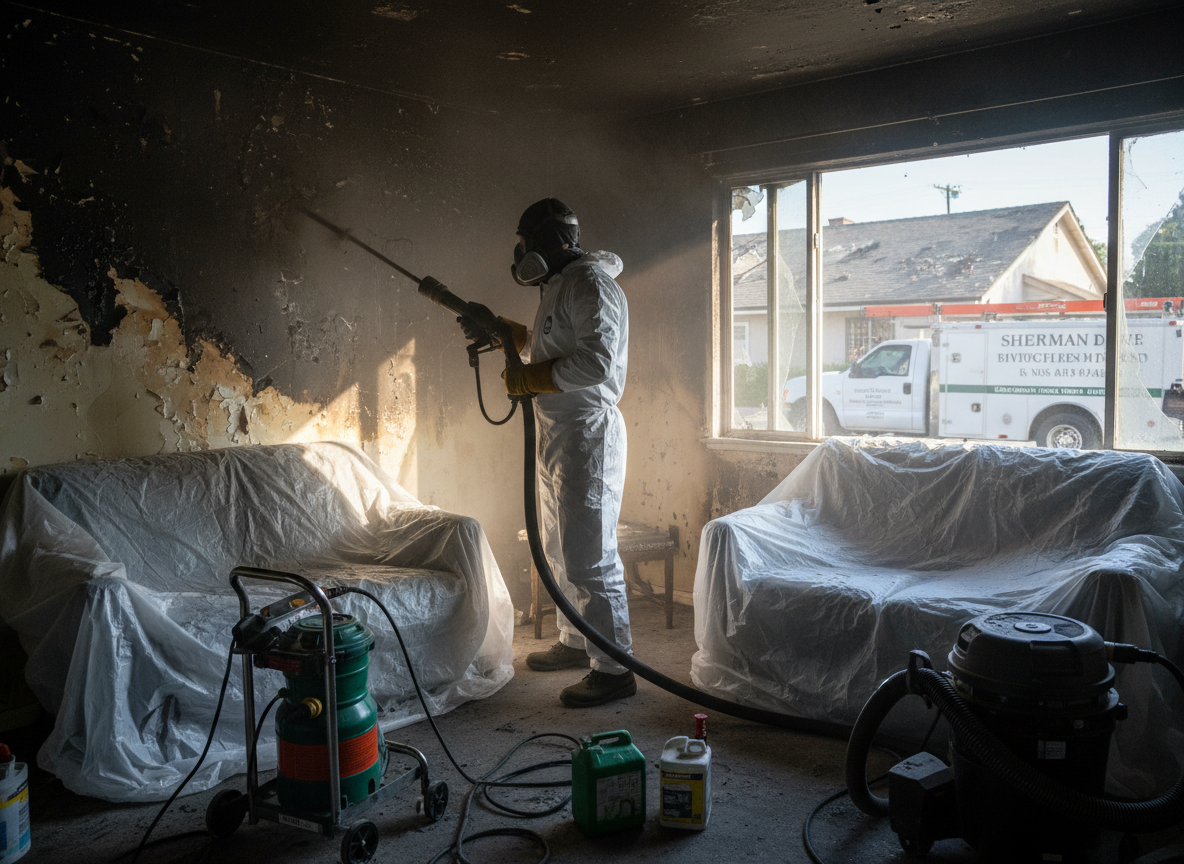
Sherman Oaks housing stock includes many 1950s and 1960s ranch homes and mid-century builds with wood framing, plaster walls, and attic insulation that readily absorb smoke odor and soot. Warm dry summers increase wildfire smoke intrusion through vents and HVAC systems, while mild winters mean restoration crews often work around ongoing occupancy rather than full winter shutdowns. Crews must isolate HVAC early because older ductwork in South Sherman Oaks and Sherman Oaks Circle commonly carries smoke into multiple rooms before residents notice.
Soot from structural fires bonds differently to the textured ceilings and popcorn finishes common in Van Nuys-adjacent properties than to modern drywall. Los Encinos State Historic Park and nearby hillside terrain can funnel embers during Santa Ana wind events, creating secondary ignition points in gutters and eaves that require inspection beyond the main fire room. Technicians test pH levels on surfaces because alkaline smoke residues from common household synthetics can etch metal fixtures and discolor hardwood floors if neutralization is skipped.
Restoration follows IICRC S500 guidelines adapted to Los Angeles County permit requirements for structural drying and odor removal. In homes near Sherman Oaks Galleria, crews often coordinate with HOA rules on exterior equipment placement and noise during 24-hour drying cycles. Hidden damage behind built-in cabinetry or in crawl spaces under raised foundations typical of the area frequently extends project scope after initial demolition.
Proper containment prevents cross-contamination into unaffected living spaces, especially in multi-story homes along Burbank Boulevard where shared walls and attics connect neighboring units. Technicians document pre-existing wear from the region's occasional heavy winter rains so that new water introduction during suppression does not get misattributed to the fire event.
Technician insight
In Sherman Oaks the thing that catches most people out with fire and smoke damage restoration is how quickly smoke travels through the shared attics of 1960s ranch homes along Burbank Blvd. One kitchen fire can deposit soot in bedrooms two houses away because the original roof vents were never sealed during past remodels. We always pull insulation and check the shared wall cavities before quoting because the dry summer air here lets fine particles travel farther than most homeowners expect.
Kitchen fire smoke in South Sherman Oaks ranch home
A cooking fire in a 1962 ranch spread soot through the attic into three bedrooms. Inspection showed heavy residue on original fiberglass insulation and inside the HVAC trunk line. Crews removed contaminated insulation, cleaned all ducts, and treated the plaster ceilings before reinstalling new insulation and returning the home to occupancy within nine days.
How it works
- 1
Emergency Assessment
Technician arrives within hours, documents all affected rooms, and secures the structure against further weather or unauthorized entry.
- 2
Containment and HVAC Shutdown
Plastic barriers and negative air machines isolate smoke from clean zones while the central air system is turned off to stop odor migration.
- 3
Soot Removal and Cleaning
HEPA vacuums and specialized sponges remove loose and embedded soot from walls, ceilings, and contents before any water-based cleaning begins.
- 4
Odor Neutralization and Drying
Thermal fogging or ozone treatments address trapped smoke in porous materials, followed by monitored drying of any water used during suppression.
- 5
Final Clearance and Reconstruction
Independent air quality testing confirms safe re-entry; minor repairs and paint restoration return the property to pre-loss condition.
Pricing
Project cost depends on square footage affected, number of rooms with smoke penetration, and whether contents require off-site cleaning.