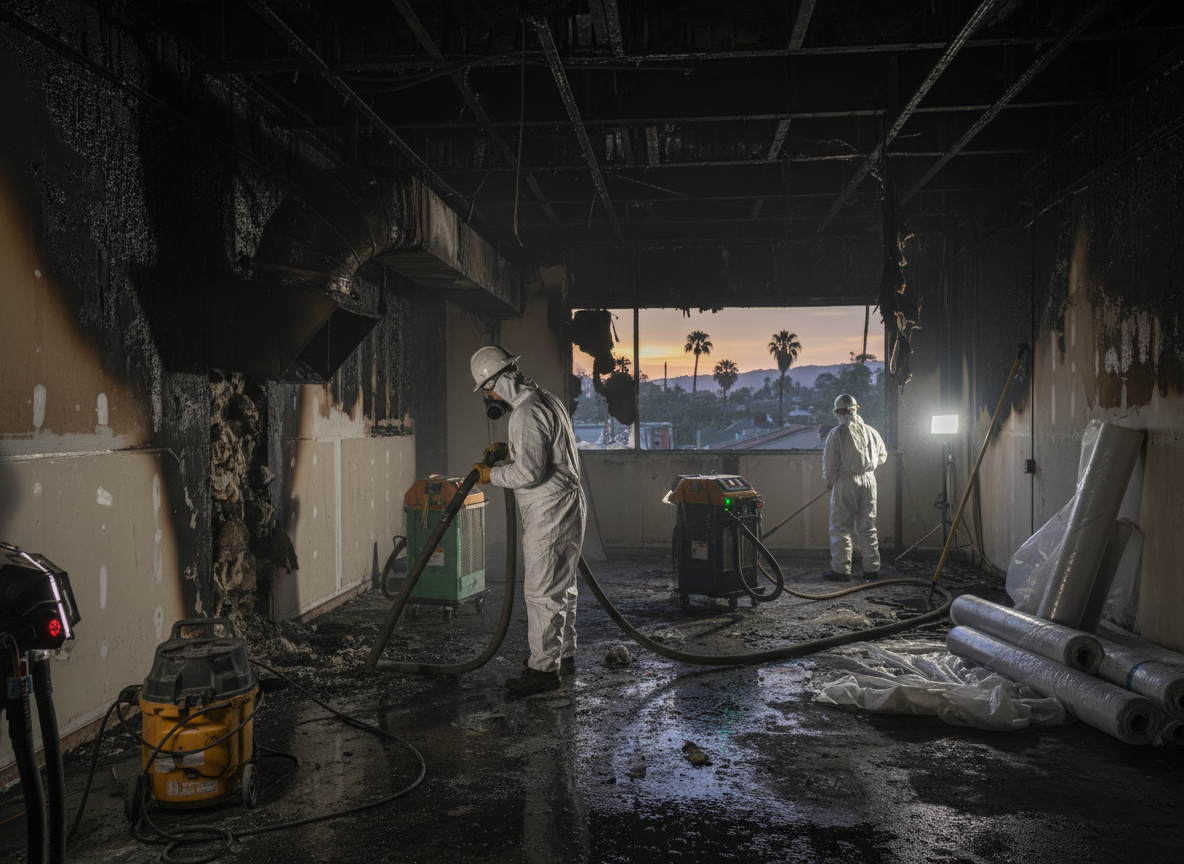
Commercial properties in Sherman Oaks often sit in mid-century buildings around the Galleria and along Ventura Boulevard that combine concrete, wood framing, and later tenant improvements. After a fire, crews must separate smoke residue from these layered materials while meeting Los Angeles County commercial building codes that require updated electrical and HVAC inspections before re-occupancy. Warm, dry summers speed surface drying but push smoke deeper into ductwork and insulation, so negative-air machines and HEPA filtration run longer than they would in milder coastal zones.
Work near Van Nuys Sherman Oaks Park and Los Encinos State Historic Park adds extra containment steps because older retail and office structures share walls with residential units. Soot can travel through common attics and parking structures, requiring corridor-by-corridor sealing that residential jobs rarely need. Crews also coordinate with the Los Angeles Fire Department on permit timelines that differ for commercial occupancies versus single-family homes.
Restoration teams document every step for insurance adjusters because commercial claims in Sherman Oaks Circle frequently involve business-interruption calculations tied to lease terms and city occupancy limits. Final clearance testing follows county health-department protocols rather than simple visual checks, especially when food-service or medical tenants are involved.
Technician insight
In Sherman Oaks the thing that catches most people out with commercial fire restoration is how many 1960s and 1970s buildings near the Galleria still have original ductwork that runs through shared attics; once those lines fill with smoke, the dry summer air pulls residue into neighboring suites and the job doubles in scope before you even start demolition.
Office Suite Fire Above Retail Space
A small electrical fire started in an upstairs office near Sherman Oaks Circle and spread smoke through the shared HVAC trunk. We isolated the second-floor suite, ran continuous negative air through the retail level below, and removed contaminated insulation from the common attic. After county clearance the building reopened within nine days without affecting the ground-floor tenant's lease obligations.
How it works
- 1
Initial Site Assessment
Technicians arrive within hours, map affected commercial zones, test for hidden smoke in HVAC and wall cavities, and note any Los Angeles County permit triggers.
- 2
Containment and Safety Setup
Barriers isolate the fire zone from adjacent retail or office spaces, negative pressure is established, and electrical or gas shutoffs are coordinated with building management.
- 3
Debris Removal and Cleaning
Charred materials are removed, surfaces are cleaned with commercial-grade agents, and air scrubbers run until particulate levels meet county re-occupancy standards.
- 4
Restoration and Verification
Repairs follow original commercial specifications, systems are retested, and final documentation is prepared for the property owner and insurer.
Pricing
Pricing varies with building size, extent of HVAC contamination, and any required county permits; we provide detailed written scopes before work begins.