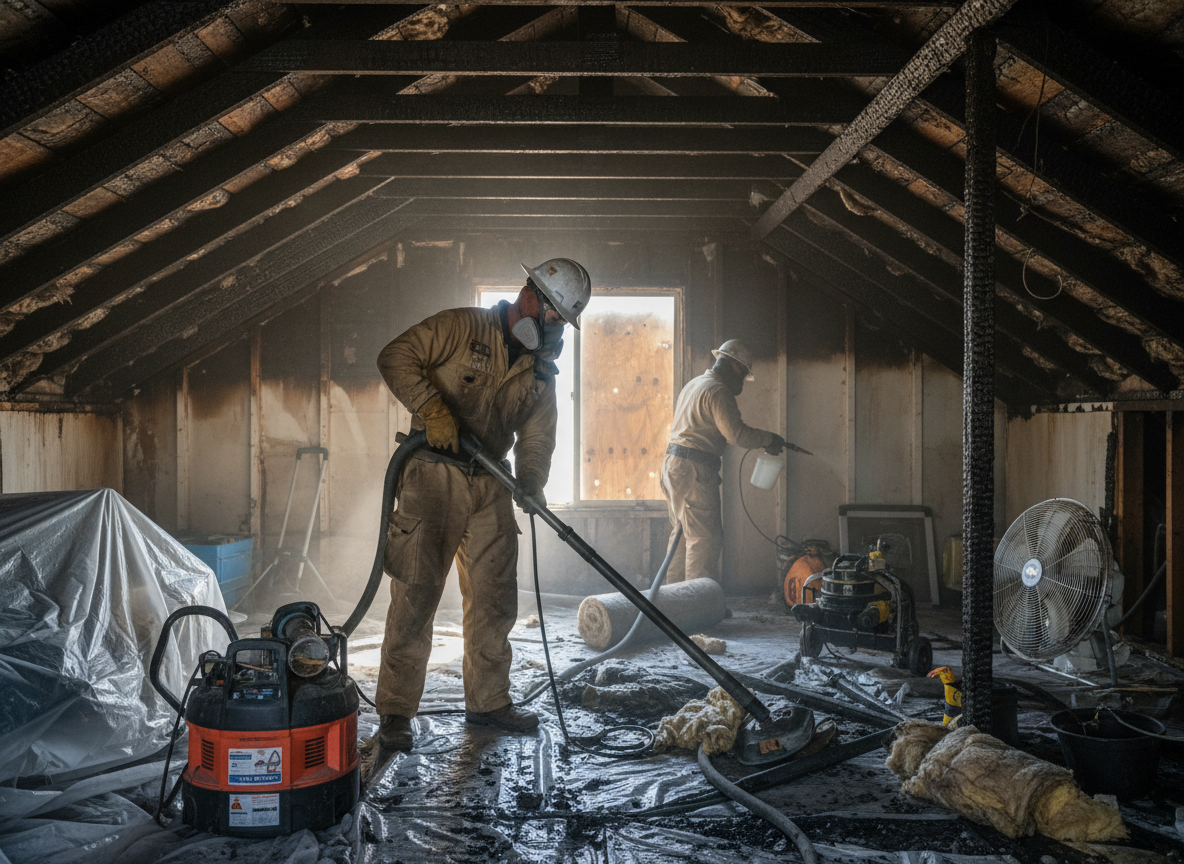
Sherman Oaks homes built before the 1980s often feature open-beam attics with older fiberglass or cellulose insulation that traps soot and odors after a fire. Warm dry summers increase the chance of embers traveling through vents near Sherman Oaks Circle and South Sherman Oaks, allowing fires to start in attics and spread downward into living spaces. Restoration requires removing contaminated insulation, treating charred rafters, and sealing against future smoke migration while complying with Los Angeles County building codes on fire-rated materials.
Mild winters in the area mean crews can work year-round but must watch for hidden moisture from suppression efforts that can lead to mold in attics above homes near Van Nuys Sherman Oaks Park. Technicians inspect for compromised wiring and HVAC ducts that run through attics, common in Encino and Studio City properties, because a missed ember can reignite days later. Proper negative air pressure and HEPA filtration keep particles from settling into the main living areas below.
After an attic fire, crews focus on structural assessment of roof decking and trusses, especially in homes close to Los Angeles freeways where traffic vibration can worsen weakened wood. Replacement insulation must meet current energy codes, and all surfaces receive odor-sealing primers before drywall repairs. This targeted work prevents long-term issues like recurring smells or reduced attic ventilation that homeowners in Sherman Oaks frequently discover months later.
Technician insight
In Sherman Oaks, the thing that catches most people out with attic fire restoration is how quickly smoke travels through the open rafters of 1950s and 1960s homes near the Sherman Oaks Galleria, especially when dry summer winds push it into insulation that looks clean from below.
Hidden Soot in South Sherman Oaks Attic
A small kitchen fire sent smoke into the attic of a 1962 home in South Sherman Oaks. We found thick soot layers inside the original cellulose insulation and along HVAC runs. Crews removed the insulation, cleaned the rafters, and replaced it with code-compliant material while keeping the family in the house.
How it works
- 1
Initial Assessment
Inspect attic for fire spread, soot depth, and structural integrity while documenting damage for insurance.
- 2
Containment and Removal
Set up negative air machines and remove burned insulation plus affected materials without disturbing lower floors.
- 3
Cleaning and Treatment
Clean rafters and surfaces, apply odor neutralizers, and treat any water damage from firefighting efforts.
- 4
Restoration and Verification
Install new insulation, repair structure, and test air quality before final walkthrough.
Pricing
Cost depends on attic size, fire extent, and whether structural repairs or new insulation are required.