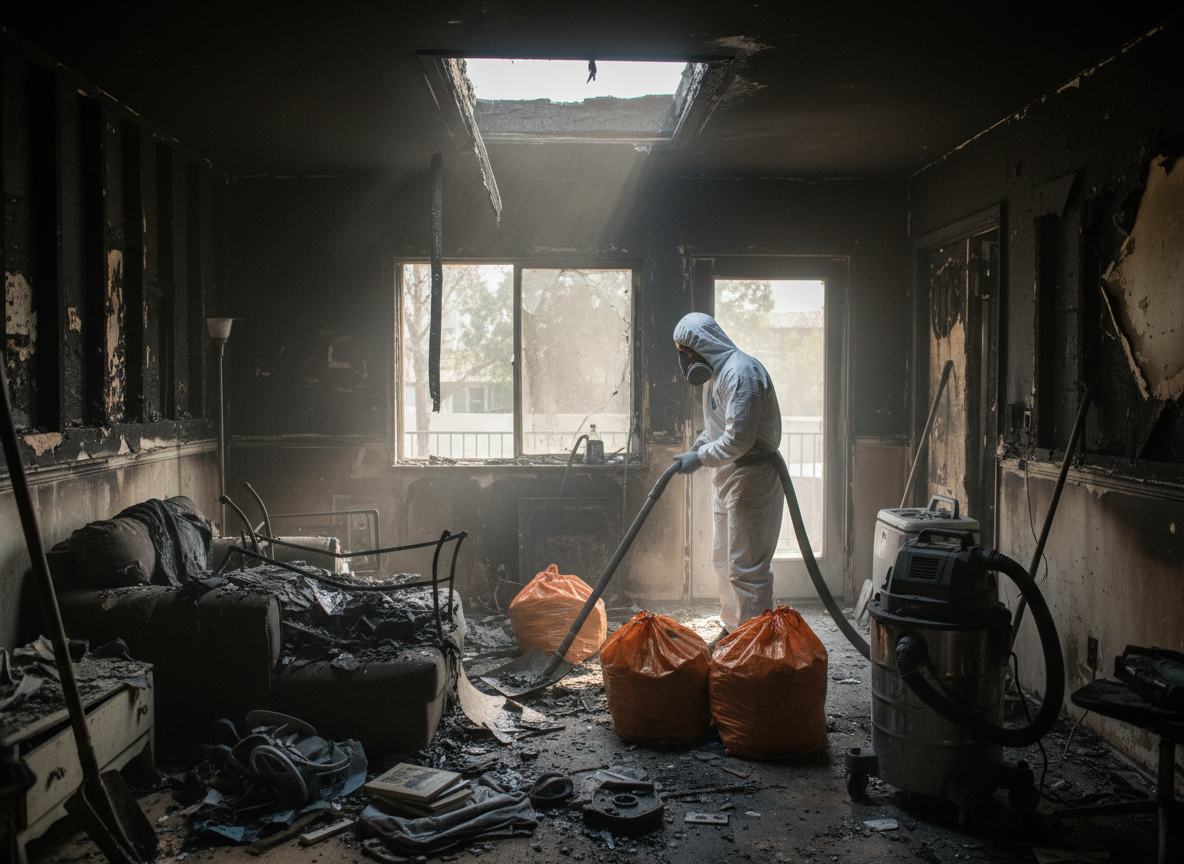
Apartment fires in Sherman Oaks often start in kitchens or electrical systems common to 1960s and 1970s multi-unit buildings found along Burbank Boulevard and near Sherman Oaks Circle. Warm dry summers accelerate soot adhesion to drywall and HVAC ducts while mild winters allow moisture from suppression water to linger in concrete slabs and shared walls. Crews must isolate units quickly to prevent cross-contamination into neighboring apartments that share ventilation shafts.
Los Angeles County building codes require removal of all charred materials to the substrate in post-fire work. In South Sherman Oaks complexes near Van Nuys Sherman Oaks Park, older lath-and-plaster construction demands careful demolition to avoid disturbing lead paint layers. Smoke odor can travel through shared attics and laundry chutes, requiring ozone or hydroxyl treatment on every affected floor rather than just the origin unit.
Cleanup teams coordinate with property managers to maintain access for residents in unaffected units while containing work zones. Residue from synthetic furnishings common in Studio City and Encino rentals produces acidic soot that corrodes metal fixtures and electronics within days if not neutralized. Final clearance testing checks both the fire unit and adjacent spaces for VOC levels before reoccupancy.
Technician insight
In Sherman Oaks the thing that catches most people out with Apartment fire cleanup is how quickly smoke travels through the shared laundry chutes and attic spaces in the older 1970s buildings around Van Nuys Sherman Oaks Park; one unit fire can coat three floors if you do not seal the vertical runs the same day.
Kitchen fire in South Sherman Oaks complex
A cooking fire in a second-floor unit spread soot through the HVAC trunk line into three neighboring apartments. We isolated the ductwork, removed the affected drywall sections, and ran hydroxyl treatment for 48 hours. Adjacent units passed air testing and tenants returned within four days.
How it works
- 1
Site Assessment
Technicians document all affected units and shared systems while mapping smoke migration paths through the building.
- 2
Containment Setup
Plastic barriers and negative air machines isolate the fire unit and prevent soot from entering hallways or neighboring apartments.
- 3
Debris Removal
Charred materials are removed to the substrate followed by HEPA vacuuming of all surfaces and HVAC registers.
- 4
Odor Neutralization
Thermal fogging or hydroxyl generators treat remaining smoke odor in walls, ceilings and ductwork.
- 5
Clearance Testing
Air sampling confirms safe VOC levels before residents return to the cleaned and adjacent units.
Pricing
Cost depends on number of units affected, depth of smoke penetration into shared systems, and required containment time; upfront quotes provided after inspection.