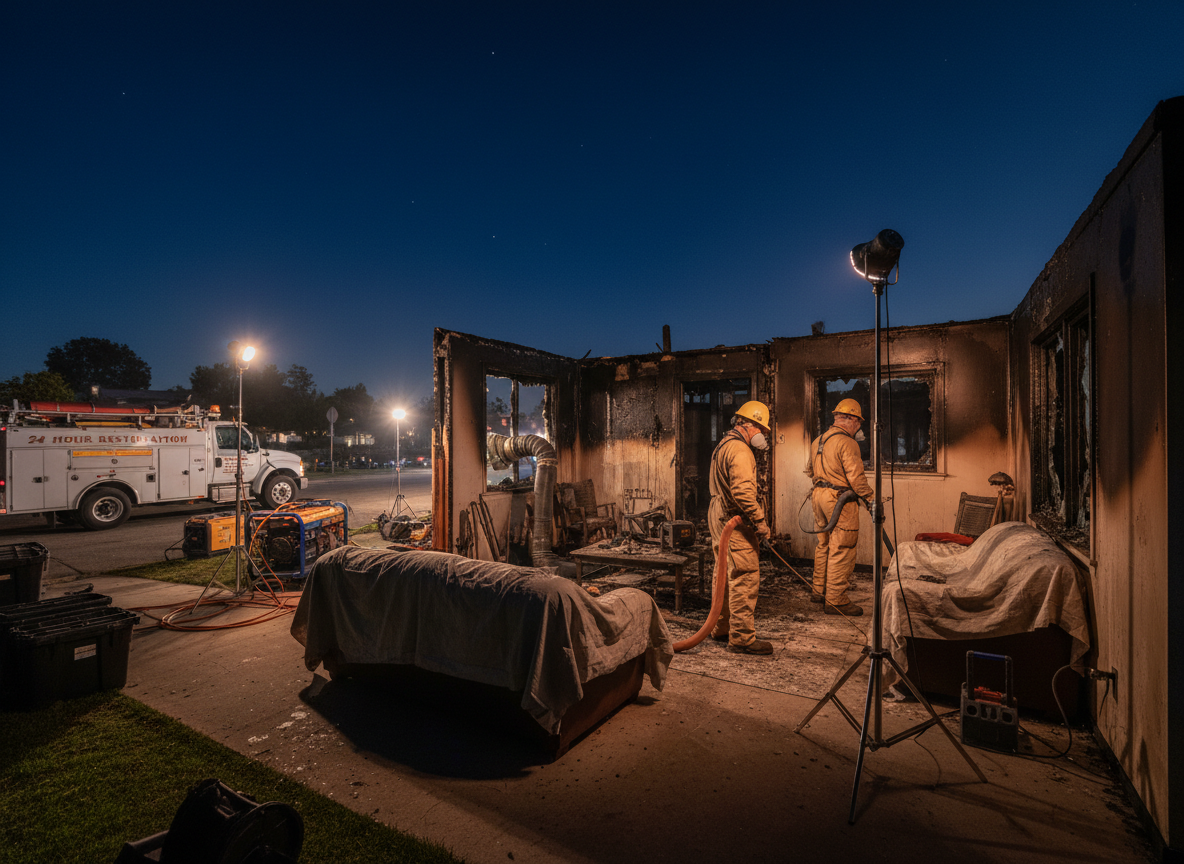
Sherman Oaks homes built from the 1950s through the 1970s often contain lath-and-plaster walls and original electrical systems that complicate 24 hour fire restoration. When a kitchen fire spreads into wall cavities near South Sherman Oaks, crews must open multiple access points rather than relying on surface cleaning alone. Warm dry summers increase soot adhesion on stucco exteriors, while mild winters allow hidden moisture from suppression water to linger inside crawl spaces under single-story ranch houses.
Response teams based at 14425 Burbank Blvd coordinate with Los Angeles County inspectors when fire affects properties bordering Los Encinos State Historic Park or Sherman Oaks Circle. Older ductwork in these homes can carry smoke into distant rooms, requiring negative-air machines and targeted HEPA filtration instead of whole-house fogging. Crews document every layer removed so insurance adjusters see the difference between cosmetic soot and structural char on load-bearing beams.
Edge cases appear regularly in Encino and Studio City spillover jobs where hillside lots create uneven smoke travel. A garage fire on a mild winter night can send embers under tile roofs that standard thermal cameras miss until the next warm day. Restoration plans therefore include roof deck inspections and targeted removal of insulation batts that retain odor long after visible damage is gone.
Technician insight
In Sherman Oaks the thing that catches most people out with 24 hour fire restoration is how quickly smoke travels through the original ductwork in 1960s ranch homes near Van Nuys Sherman Oaks Park. Dry summer air makes soot stick to stucco, and if you skip pulling the insulation in the attic the smell returns the first time the heat kicks on.
Garage Fire Spread Into Attic
A late-night electrical fire started in a detached garage off Burbank Blvd. We found smoke had entered the main house through shared attic space and settled in fiberglass batts. After removing the insulation and running negative air for three days, the odor was eliminated and the homeowner returned without further demolition.
How it works
- 1
Immediate Dispatch
Technician arrives within hours to secure the property and document visible fire, smoke, and water damage.
- 2
Containment And Safety
Board-up openings, set up negative pressure zones, and test for electrical or structural hazards before deeper work begins.
- 3
Soot And Debris Removal
HEPA vacuum surfaces, remove charred materials, and clean HVAC components that carried smoke through the home.
- 4
Drying And Odor Control
Deploy air movers and dehumidifiers, then apply odor-neutralizing agents to porous materials that retain smoke smell.
- 5
Final Verification
Walk-through with homeowner and adjuster to confirm all affected areas have been addressed and cleared for rebuild.
Pricing
Pricing varies by fire size, affected square footage, and whether hidden smoke traveled through older plaster walls common in Sherman Oaks.